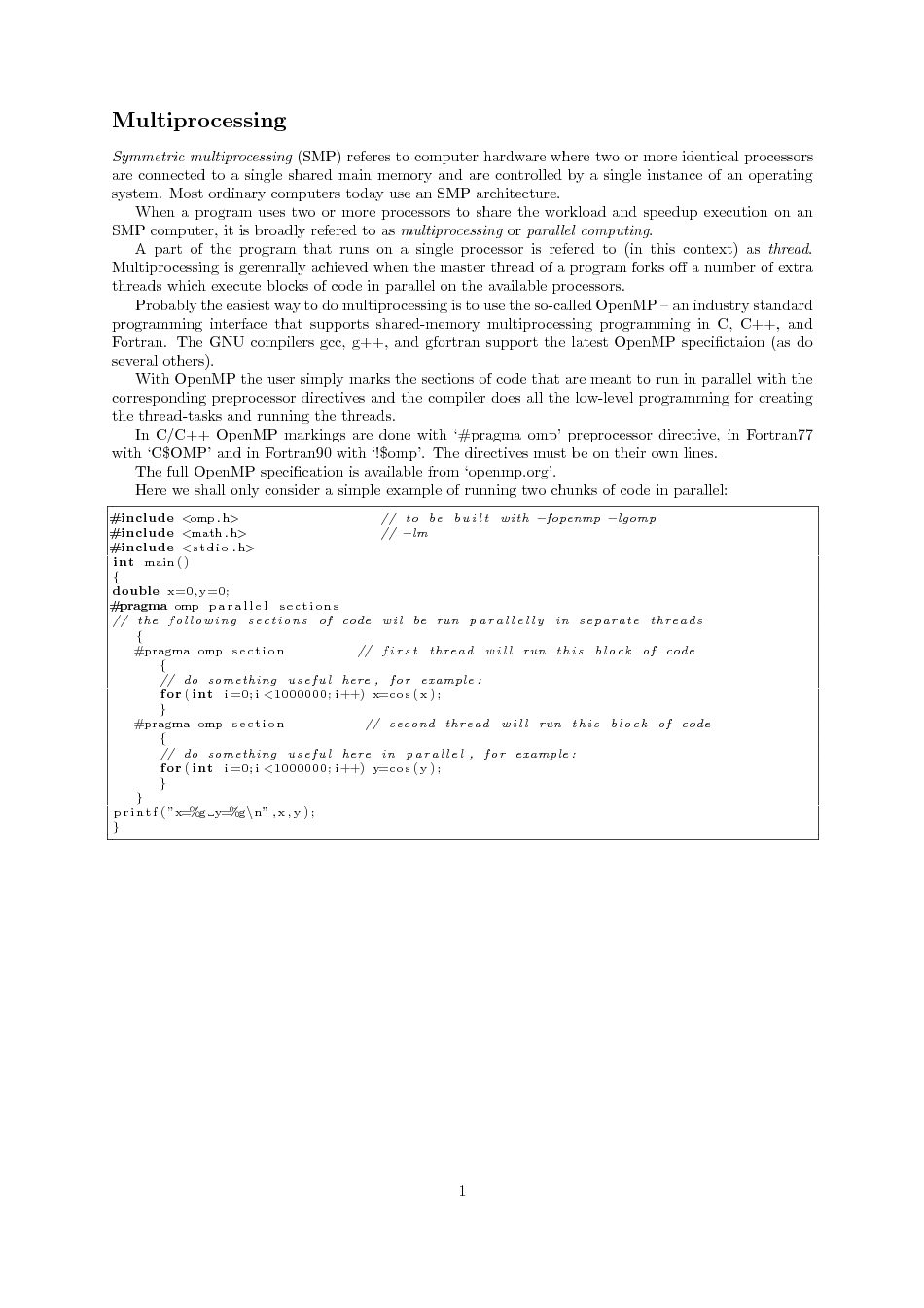
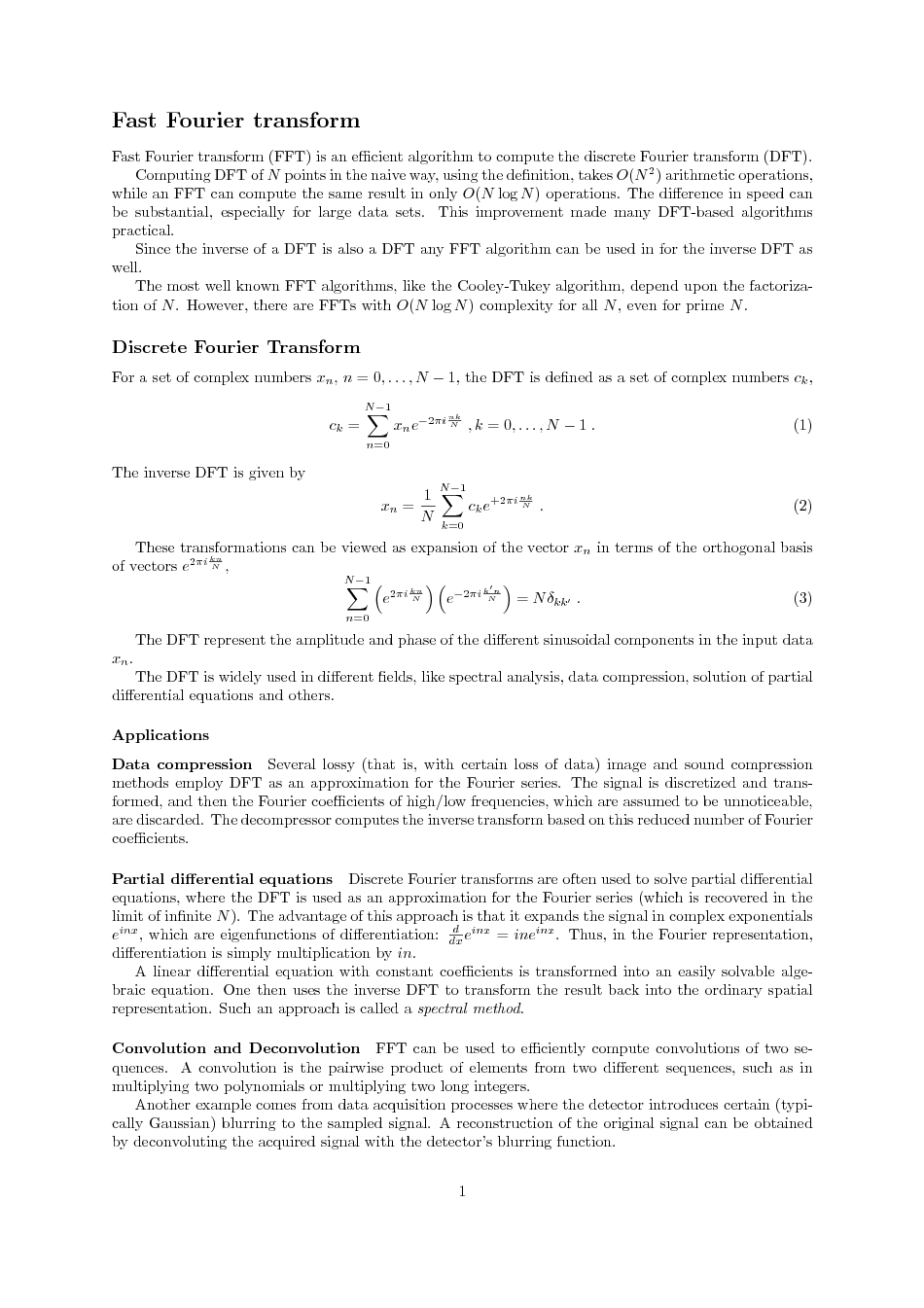
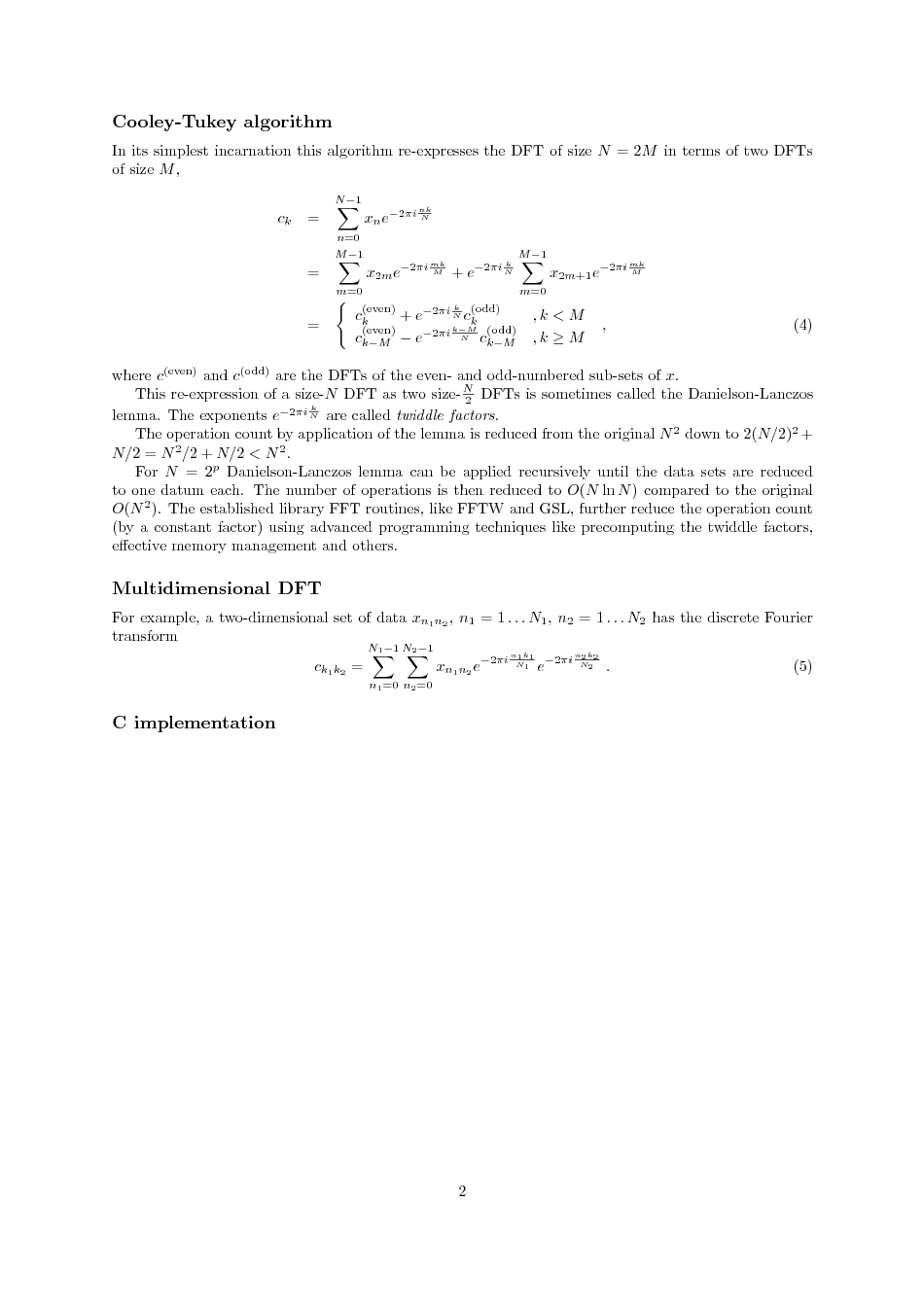
The second batch, 30/06, please find --- at the appropriate time --- your take-home examination assignments here. You have got three days to do the project. That is, until Friday, 03/07 10:00.
The first batch, 18/06, please find --- at the appropriate time --- your take-home examination assignments here. You have got three days to do the project. That is, until Sunday, 21/06.
The scores for the homeworks and examination project will be averaged with the weights 55%-45%.
The two examination runs start 18/6, 10:00 and 30/6, 10:00 and run for three days. You have to sign up for one of the two dates in our Wiki before 15/6,24:00. The assignments will appear at this page at the start of the run.
You are not obliged to come to either lectures or the seminars. However if I say something important at the lecture (like, for example, do not build Jacobi rotation matrix explicitly) it is *your* responsibility to be aware of it. Perhaps you could use our Wiki page to note down the important staff.
You can vote for the examination dates at our Wiki page. Put your initials under the date you vote for.
Full-Diagonalization vs. One-Eigenvalue-Only: my measurements show, that full diagonalization takes about four times longer --- for a good matrix --- than calculation of one eigenvalue only. However, the result does depend on the matrix and in the worst case the times are comparable.
MATLAB vs. LAPACK shootout: LAPACK actually beats MATLAB on matrix diagonalization problem on the same box (lifa, that is, where MATLAB is installed). LAPACK was compiled on lifa with gfortran-6.0.0 with the following optimization flags:
-O3 -ffast-math -funroll-loops -march=native -msse4a -mssse3 -mpopcnt -mfpmath=sse
If your file-server does no show makefiles in the browser, you've got to change the makefile-name to "Makefile.txt" and run your first make command as "make -f Makefile.txt" (next time you simply use "!m" which runs the last command starting with "m").
A comparison of our cubic spline algorithm (from The Book, that is) with plotutils-spline, octave-spline and GSL-spline shows that our algorithm is very close to GSL-spline. I believe this is a Good Thing. Suprisingly, plotutils and octave splines differ from our/GSL natural spline. Apparently they have implemented some other boundary conditions.
You must first build the exercise on your server and only then claim your points so that your outputs/figures are readily avalable for inspection.
When doing quadratic and cubic splines: you must build the spline only once (for a given data set) and store it in a class or in a closure, and then use the stored spline for the subsequent evaluations of the interpolant. To build the spline anew for every evaluation is not a good programming and only deserves, say, 0.1 points. Seriously.
Torsten has discovered a bug in the spreadsheet: the D-part grade of the Interpolation exercise was not multiplied by its weight in the cell I$5 (which is zero at the moment). Will you please correct the bug?
For people who use lifa as file-server: it seems that the URL-address in the form
http://owww.phys.au.dk/~fedorov/numeric/works *much* better than
http://users-phys.au.dk/fedorov/numeric/In fact, the other one is not good at all. So, make sure that you have the first type of URL in our spreadsheet.
In this google-spreadsheet copy/paste the line with my name and then change the content accordingly. Copy/pasting is essential, because the line is actually a program to calculate your points. You shall give yourself a grade from 0 (nothing done) to 1 (everything is done perfectly) for every sub-exercise. The spreadsheet than multiplies your grade by the weight of the sub-exercise and adds up to your total points.
After some trials I came to the conclusion that a google-spreadsheet for our bookkeeping is a more convenient solution than a Wiki. So, having done the Hello-World exercise send me an email with the subject "Numerical-2015" and I will give you the permission to edit the bookkeeping spreadsheet.
The exercises and notes below which are grayed-out will probably be modified slightly.
make
utility (here lies the manual);
homework structure: makefile, main.c, method.c, utils.c →
output.txt, illustration.png, ... .
lifa.phys.au.dk. From outside the firewall
you login to lifa with RSA-keys; from inside –
with NFIT password. VPN effectively brings
you inside the firewall.
molveno, which is a two-processor box running the current
Ubuntu. You can only login into molveno from inside the
firewall. That is, from home you have to login first into
lifa.phys.au.dk and then to molveno. molveno
box is better updated and has more software installed.